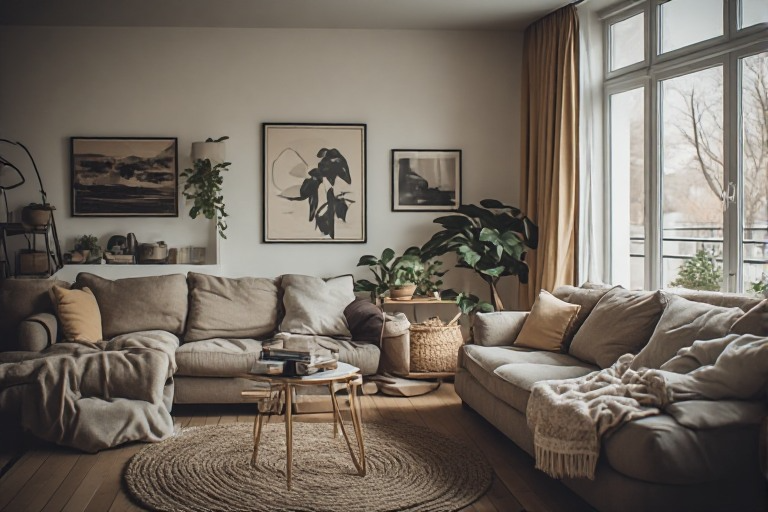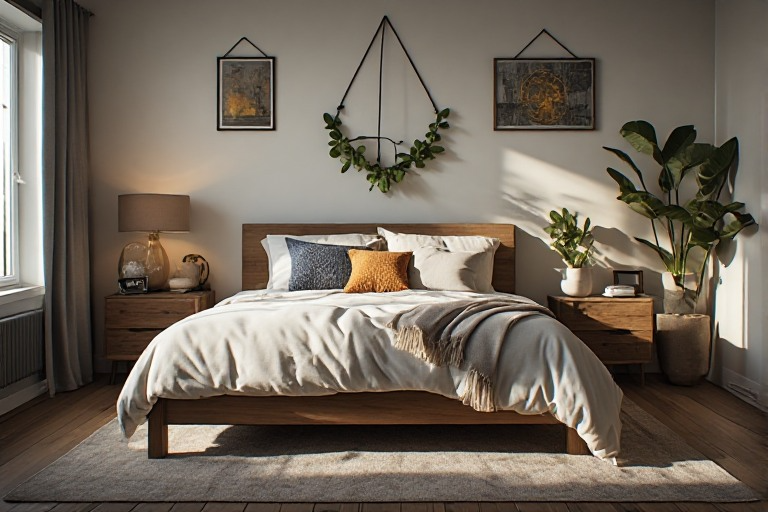
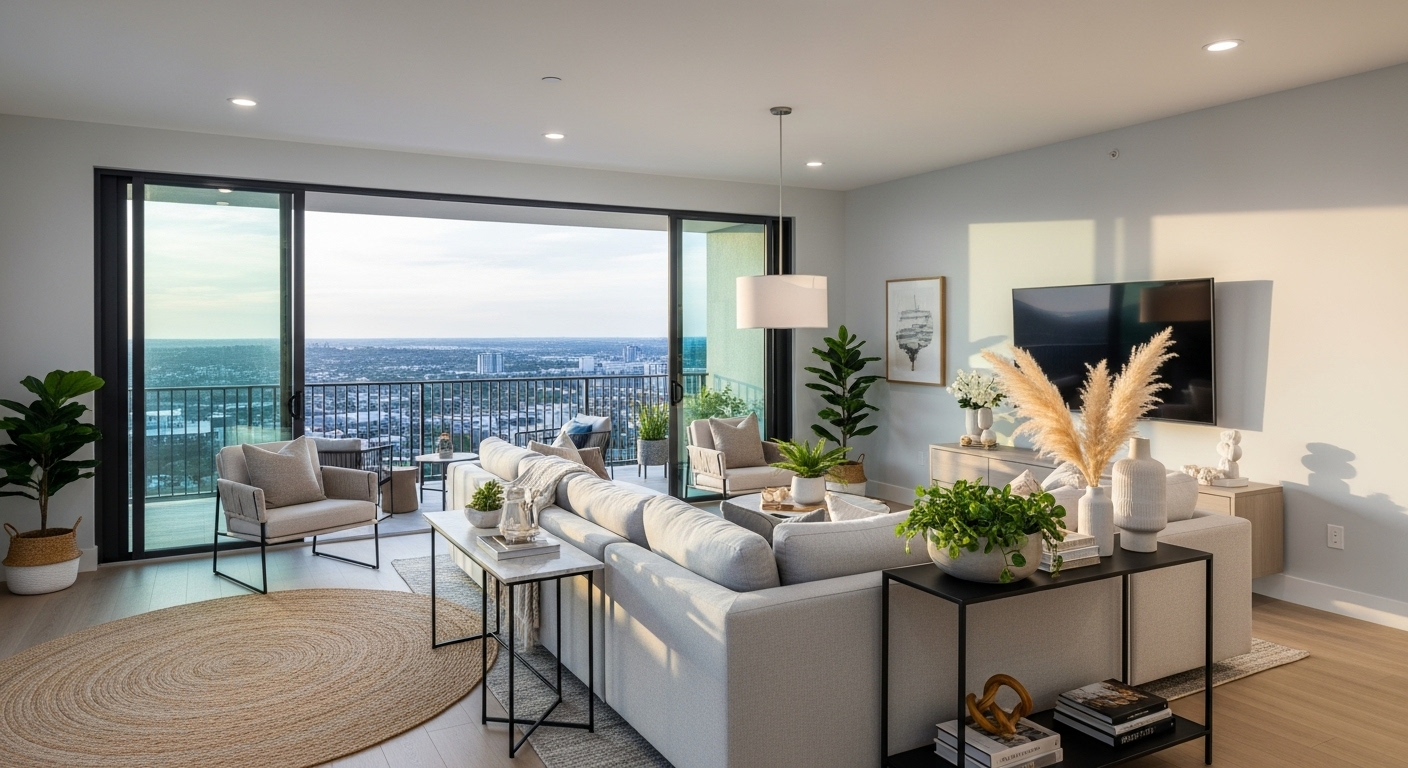
Open Living Room Layout Ideas That Make Your Space Feel Bigger Instantly
If your living room feels cramped, awkward, or just a little “off,” you’re not alone. Open layouts can be tricky. You want that airy, spacious vibe… but without your space feeling empty or disconnected.
The good news? With the right open living room layout ideas, you can completely transform how your space looks and feels — without knocking down walls or spending a fortune. A few smart changes can make your room feel bigger, brighter, and so much more inviting.
Whether you’re working with a small apartment or a large open-concept home, these ideas will help you create a layout that flows beautifully and actually works for your daily life.
1. Define Zones with Rugs
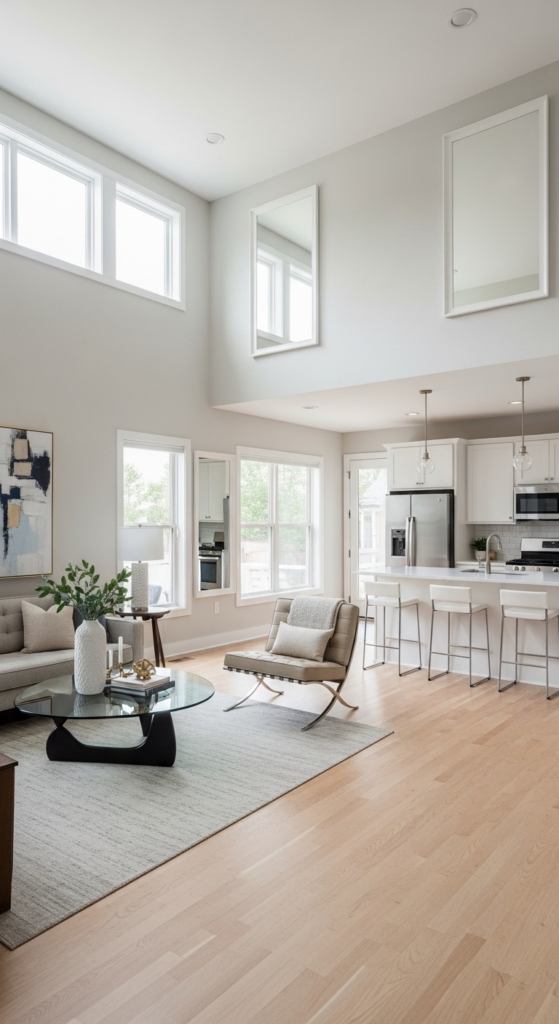
One of the easiest ways to structure an open space is by using area rugs. A rug instantly anchors your seating area and visually separates it from dining or kitchen zones.
Choose a rug large enough so at least the front legs of your furniture sit on it. This makes everything feel cohesive instead of scattered.
2. Float Your Furniture (Yes, Really)
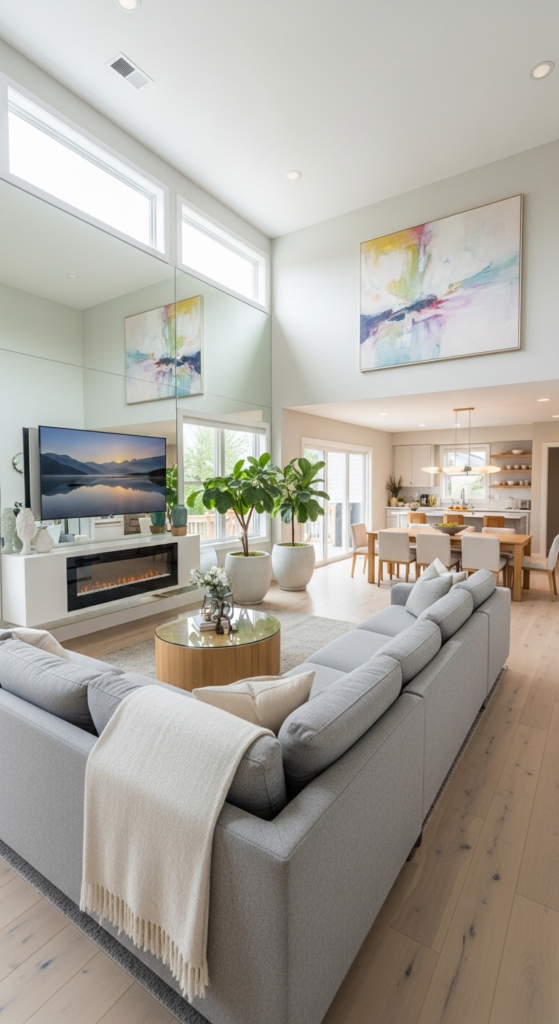
Pushing all your furniture against the walls might seem like a space-saving trick, but it actually makes your room feel less intentional.
Try floating your sofa in the center of the room. This creates a natural division between spaces and gives your layout a designer feel — even on a budget.
3. Use a Sofa as a Divider
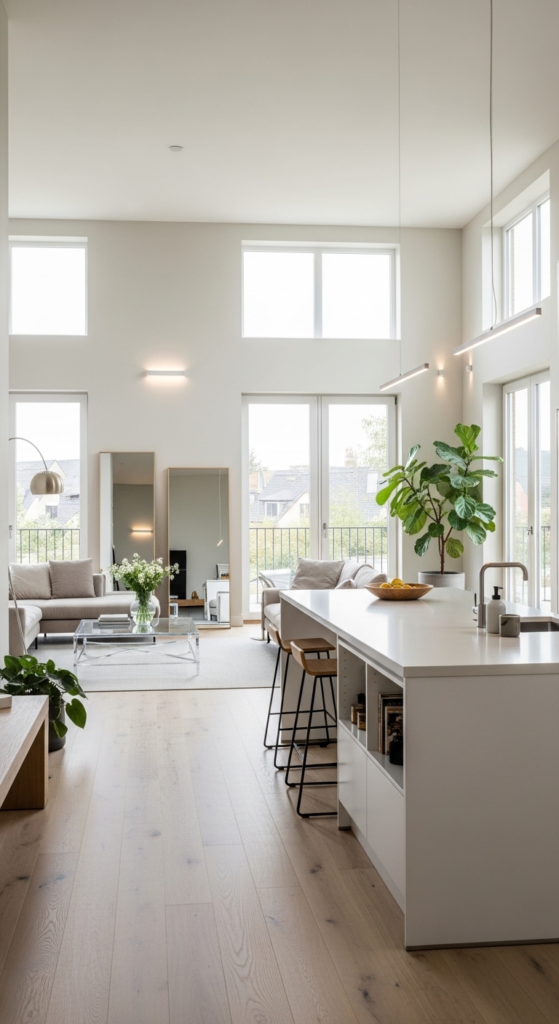
Your sofa can do more than just provide seating. In an open layout, it can act as a subtle divider between your living area and other spaces.
Place it facing away from the dining or kitchen area. This creates a clear boundary without needing walls or bulky partitions.
4. Add a Console Table Behind the Sofa
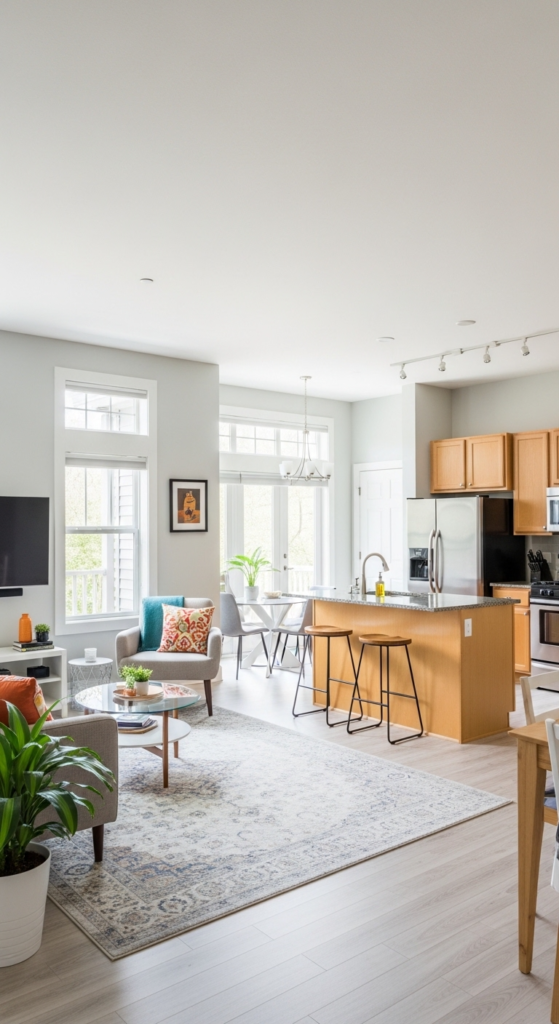
If your sofa is floating, a slim console table behind it adds both style and function.
You can decorate it with lamps, books, or small decor pieces. It also helps define the space while giving you extra surface area — perfect for small homes.
5. Keep Walkways Clear
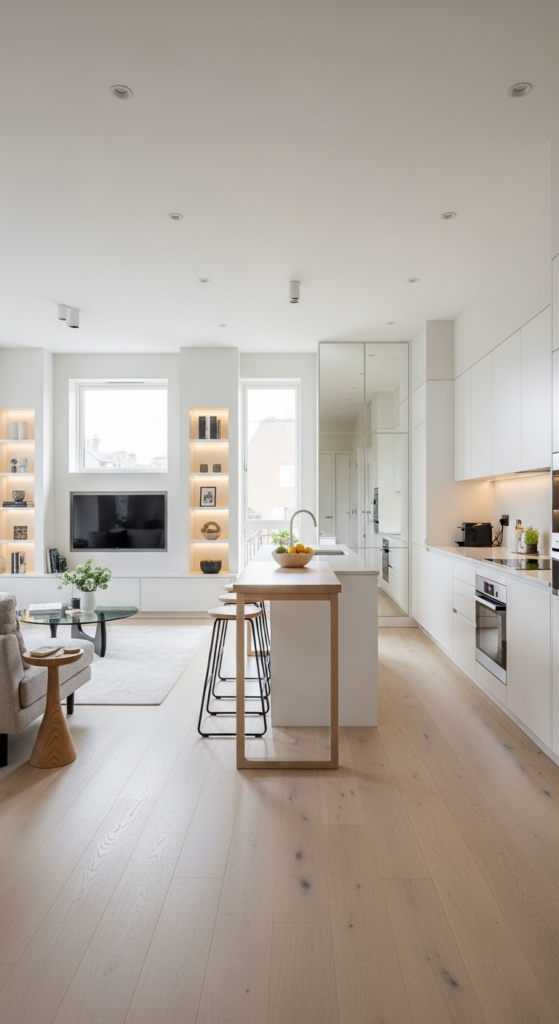
One of the biggest mistakes in open living room layout ideas is blocking natural pathways.
Make sure there’s enough space to walk comfortably between zones. Aim for at least 2–3 feet of clearance so your layout feels open and easy to move through.
6. Use Lighting to Define Each Area
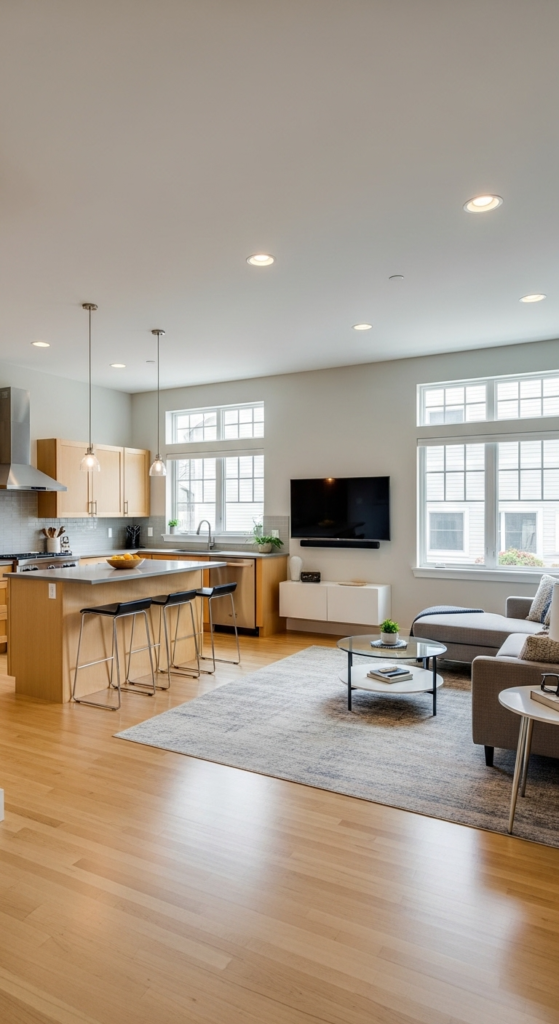
Lighting isn’t just practical — it’s a powerful design tool.
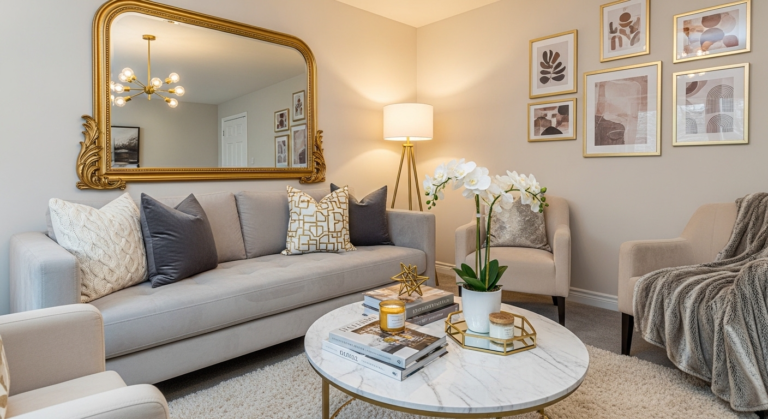
Use a floor lamp for your living area, a pendant light over your dining table, and softer lighting for cozy corners. This helps each zone feel intentional while keeping the overall space connected.
7. Choose a Consistent Color Palette
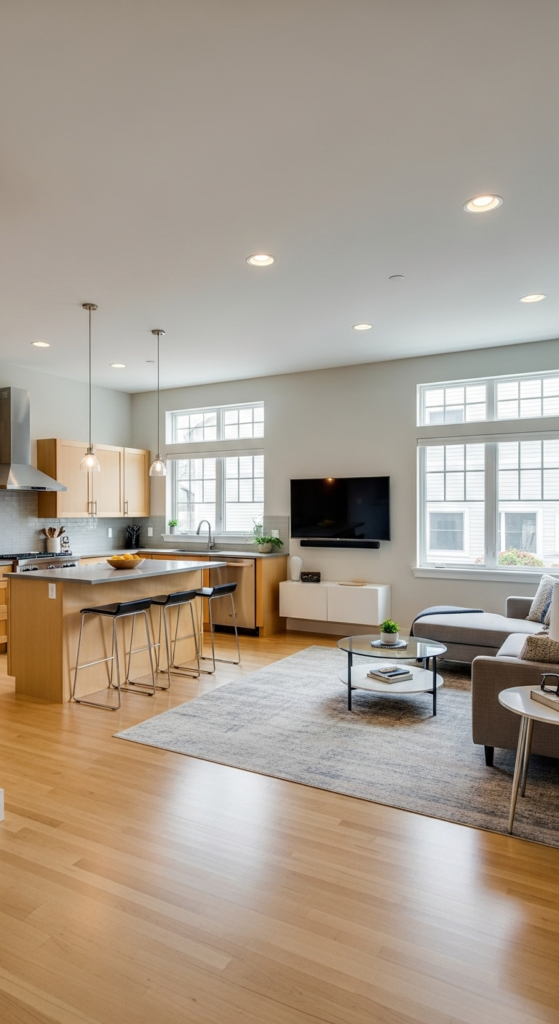
An open layout needs visual harmony. If every area uses totally different colors, the space can feel chaotic.
Stick to a consistent color palette across your living, dining, and kitchen areas. This doesn’t mean everything has to match — just keep tones complementary so everything flows together.
8. Layer Different Textures
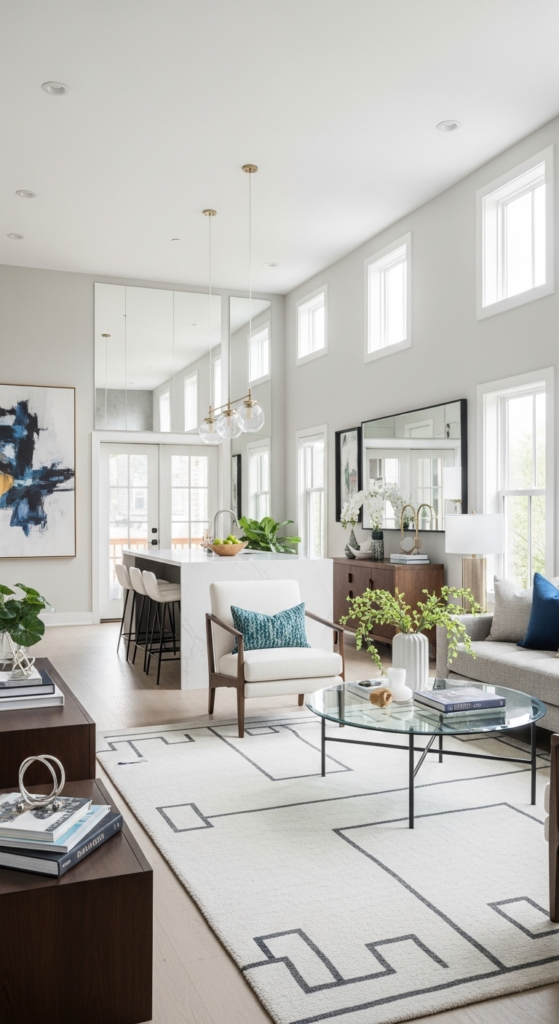
When your space is open, texture becomes even more important.
Mix materials like wood, linen, metal, and soft fabrics to add depth. This keeps your space from feeling flat while still maintaining a cohesive look.
9. Use Open Shelving as a Divider
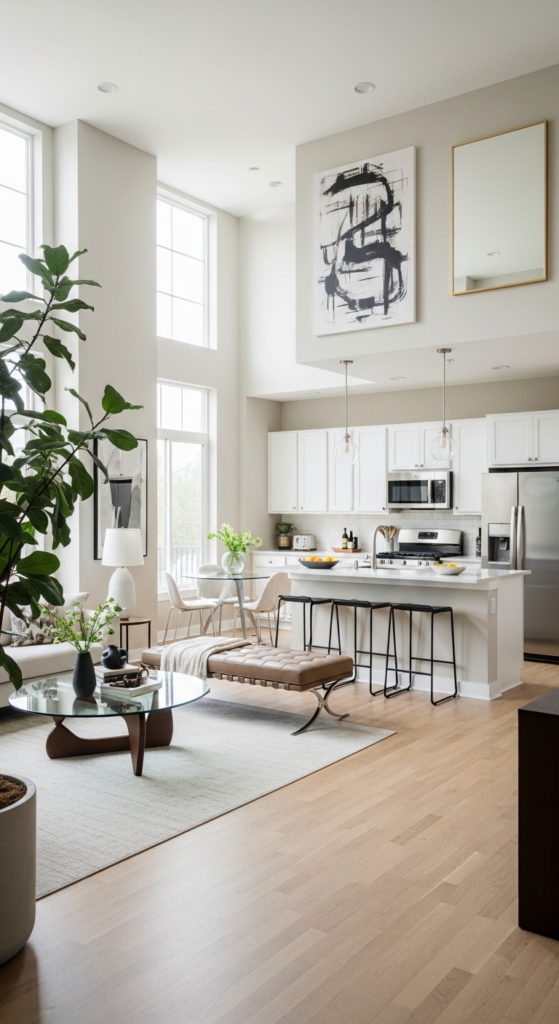
If you want separation without closing off your space, open shelving is a great solution.
It creates a visual boundary while still allowing light to pass through. Plus, it gives you extra storage and a place to style decor
10. Create a Focal Point
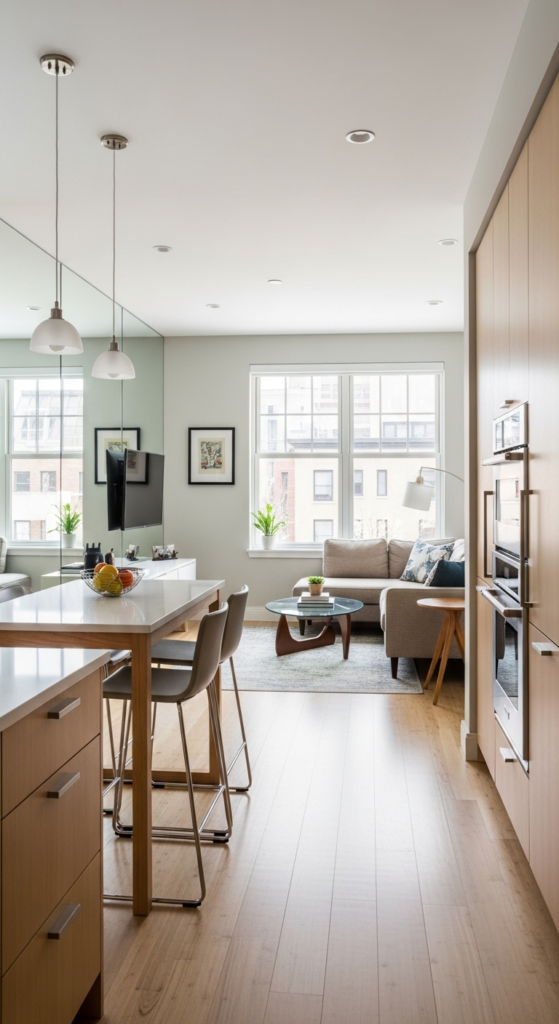
Every living room needs a focal point — even in an open layout.
This could be a TV wall, a fireplace, or a statement art piece. Arrange your furniture around it so your space feels grounded and intentional.